
The Secret Weapon for T20 Apps: Why Ivy Leagues Love the “Optional Portfolio”
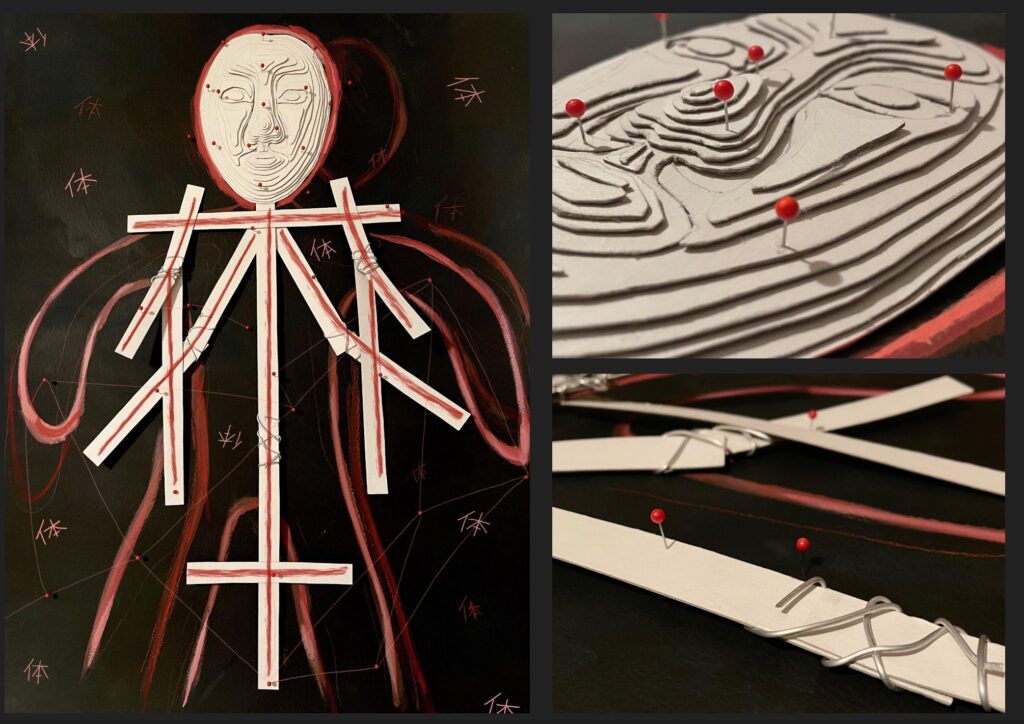
I often work with students who are aiming for the Ivy League or MIT—not as art majors, but as future engineers, doctors, or lawyers.
They often ask: “Tingting, I’m applying for Computer Science. Why should I spend time on an Art Portfolio?”
The answer lies in what the Ivies call the “Optional Arts Supplement” and what MIT calls the “Creative Portfolio.” Here is why these top-tier schools are so interested in your art.
1. It’s the “X-Factor” in a Sea of Perfect Scores
At schools like Harvard, Yale, or Princeton, almost every applicant has a near-perfect GPA and SAT. Admissions officers are looking for a reason to pick you over someone else.
An Arts Supplement proves you have “Creative Grit.” It shows that while others were just studying for exams, you were building, creating, and thinking outside the box. It gives the admissions team a visual window into your personality that an essay simply can’t capture.
2. MIT & the “Maker” Mindset
MIT doesn’t just want students who can solve equations; they want “Makers.” Their Creative Portfolio (formerly the Maker Portfolio) is a way for them to see how you use your hands and mind together.
Whether it’s a series of intricate digital designs, a sculpture that experiments with gravity, or a sketch showing how you deconstruct a machine, MIT uses this to see your problem-solving logic. In their eyes, a great artist and a great engineer share the same DNA: Innovation.
3. Proving “Holistic” Excellence
Ivy League schools use a “Holistic Review.” They want a diverse class of multi-dimensional people.
- The “Architectural” Thinker: Even for a History major, a portfolio of sketches showing urban landscapes proves you observe the world deeply.
- The “Empathetic” Scientist: A Biology applicant with a series of detailed botanical illustrations shows a level of focus and patience that will translate perfectly to a research lab.
4. How Does It Work? (The Faculty Review)
When you submit an Optional Arts Supplement, it doesn’t just go to the admissions office. It is often sent to the actual Art Department professors at the university.
If a Yale art professor looks at your work and says, “This student has genuine talent and a unique voice,” that recommendation carries massive weight in the final decision. It’s like having a world-class expert vouching for your potential.
Tingting’s Advice: Quality Over Quantity
Because this is “Optional,” it must be high quality. A weak portfolio can actually hurt your application.
At my studio, we don’t just “make drawings.” We:
- Curate with Strategy: We select 10-15 pieces that highlight your specific strengths (e.g., your technical precision or your conceptual storytelling).
- Bridge the Gap: We make sure your art complements your academic major.
- Professional Presentation: We focus on high-quality photography and artist statements that sound like a mature, thoughtful young adult.
You don’t have to be an “Art Major” to be an artist in the eyes of the Ivy League. Let’s show them what you can create.